The Ecuadorian Amazon Rainforest is one of the most biodiverse places in the world and one of the richest and most diverse ecosystems on the planet. It is known as Ecuador’s “green lung”, home to thousands of species of birds, fish, insects, and mammals, including emblematic animals such as the jaguar, the pink river dolphin, and capuchin monkeys. Have a great adventure, hiking through millennium trees and join a drink of “chicha” with indigenous families, where you will understand and experience, that the forest and their way of life has not changed for thousands of years!
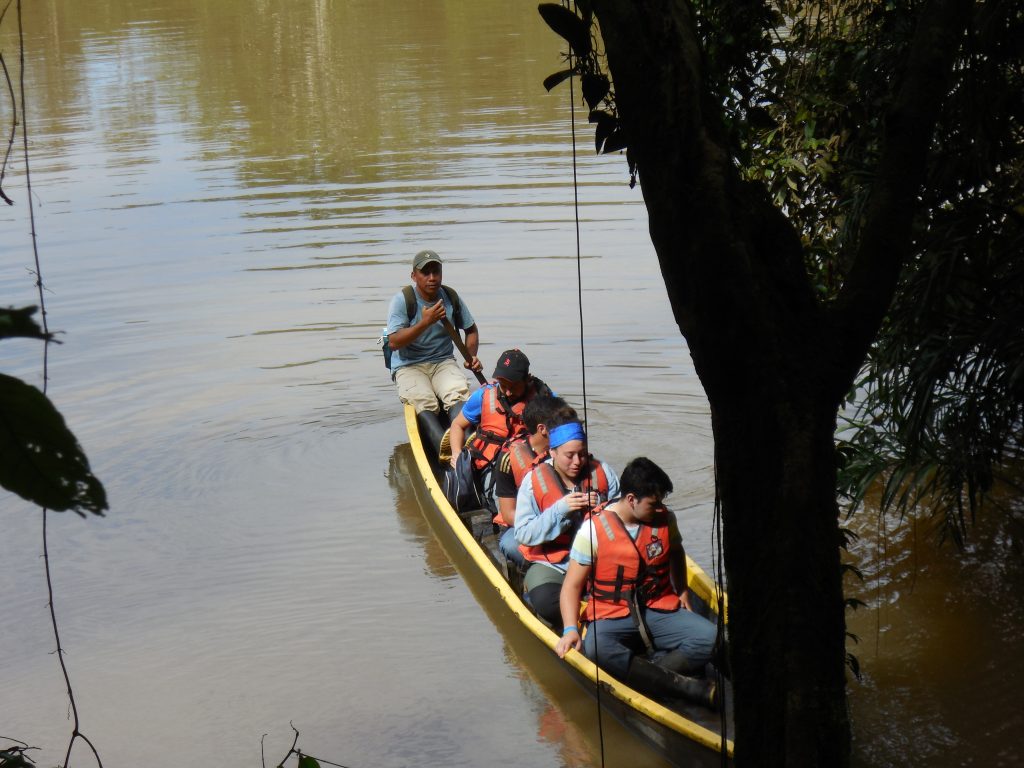
You can learn about the use of the medicinal plants that have inspired many of our ‘modern’ medicines and the people that first discovered them. Traveling on rivers to access to the areas where you spend the nights and hike deep into the forest to see the wildlife, flora and fauna in a hot and humid environment. Using these traditional canoes, you can explore hidden lagoons deep in the forest to search for Caiman, fish for Piranha (catch and release), and watch monkeys swinging through the trees.
The conservation of this region is being threatened by oil extraction, gold mining, deforestation due to agricultural expansion and logging. These activities not only damage the environment but also deeply affect the Indigenous communities and people living in remote areas, as they depend directly on rivers for water and food, so contamination leads to disease and the loss of their livelihoods. In addition, they are constantly forced to defend their ancestral territories, resisting external pressures that seek to exploit their resources without considering the cultural and spiritual value that the Amazon rainforest represents for them.
Despite this unfortunate scenario, the Ecuadorian Amazon still keeps its vital strength. Its intact forests continue to produce oxygen, regulate the climate, and protect the unique biodiversity. In this context, sustainable tourism emerges as a hopeful alternative and by visiting these communities responsibly, travelers not only enjoy unforgettable experiences in contact with nature, but also generate income for local populations. These resources help strengthen community projects, preserve ancestral knowledge, and fund initiatives for the conservation of the flora and fauna.
There are several lodges and prices vary depending on comfort and location. The two main highlights are: Cuyabeno National Park and Yasuni National Park.
The best time of the year to travel is between December to March as there is less rain. Rainy season is between April and July.